
Backyard pools can bring people together, but they also introduce safety concerns that call for careful attention. According to the Centers for Disease Control and Prevention, drowning remains a leading cause of accidental death for young children, and it can happen quickly during even a brief lapse in supervision. Because of this, a pool can be both a source of enjoyment and a notable exposure that requires careful risk management steps.
It’s also important to know that pools are viewed as “attractive nuisances,” which means homeowners may face liability even if neighborhood children access their pool or the surrounding area without permission. Taking preventive steps helps to protect lives and demonstrates the level of reasonable care that is expected by insurance companies and legal standards.
Strong pool safety depends on multiple layers of protection. Physical barriers, active supervision, emergency readiness and routine maintenance can all play a role in reducing the chance of an accident.
Essential Pool Supervision Guidelines
According to the National Drowning Prevention Alliance, drowning is often silent and can occur within seconds, so active supervision is the foundation of pool safety. Young children should always remain within an arm’s reach of a responsible adult when near water. Swimming abilities or flotation devices do not replace direct supervision; even confident swimmers need an adult who is focused on the pool area.
Key supervision practices include:
- Assigning a designated “water watcher” whose sole responsibility is monitoring the pool
- Avoiding distractions like phones, books or conversations during watch periods
- Rotating supervision duties during gatherings to help maintain focus
- Establishing clear supervision roles so responsibility is not assumed or overlooked
Emergency readiness is also critical. Supervising adults should know CPR and have quick access to emergency contact information, which should be posted near the pool. Consider completing formal water safety training through a local organization, particularly if you own or frequently visit a home with a pool.
Physical Safety Barriers
Physical barriers play an important role in preventing unsupervised access to the pool area and, depending on your location, may be mandated. Recommended or required safety features may include:
- A fence that is at least four feet high that fully encloses the pool and separates it from the house and yard
- Spacing between pickets or links that are narrow enough to prevent children from slipping through
- Self-closing and self-latching gates that open away from the pool
- Locked gates when the pool is not under active supervision
- Anti-entrapment drain covers, which should be inspected regularly and replaced if damaged, to help prevent suction-related injuries
- Door alarms on all exits that lead to the pool area
- Pool surface or underwater motion alarms for secondary alerts
To help keep safety barriers effective, remove any outdoor items that could be used for climbing over fences, such as furniture, tools and toys. Above-ground pool owners should also remove ladders and steps when the pool is not in use.
Chemical Safety and Water Quality
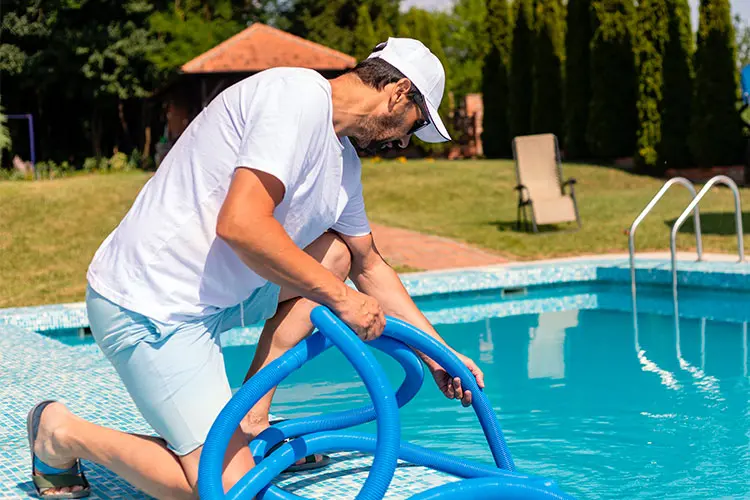
Safe chemical handling and maintaining proper water balance can help reduce health risks for both swimmers and handlers. Some best practices include:
- Store pool chemicals in a locked, ventilated space away from heat and out of children’s reach.
- Always add chemicals to water – never add water to chemicals.
- Do not mix chemicals together, as this could cause a dangerous reaction.
- Follow all manufacturer instructions exactly.
- When handling pool products, wear gloves and eye protection to help prevent chemical burns and breathing problems.
- Test chlorine and pH levels often, especially during periods of high use.
- Maintain a pH level between 7.2 and 7.8 to help support disinfection and reduce irritation.
- Keep written records of testing and treatments for safety and insurance purposes.
Pool Rules and Safe Practices
Clear rules can help to reduce both drowning and injury risks. Be sure to review pool rules and safety guidelines with all guests. Common safety rules for pool usage include:
- No diving unless the water depth meets safety standards (typically 9 feet or more)
- No running on wet pool decks to help reduce slips and falls
- If applicable, separating diving areas from play zones to prevent collisions
- Removing all toys and floats when the pool is not in use, so children are not tempted to reach into the water
- Avoiding decorative features or landscaping that limits visibility into the pool
Post emergency procedures and contact information near the pool and review them with family members and guests. Consider practicing emergency drills to help support a faster response and build confidence, particularly with children.
Equipment and Emergency Preparedness
Emergency equipment should be easy to locate and ready for immediate use. A few best practices include:
- Keep U.S. Coast Guard-approved life jackets, reaching poles and ring buoys near the pool. Store them in the same place each time so adults can quickly locate them in an emergency.
- Use ground fault circuit interrupter (GFCI) outlets for all pool-area electrical equipment. These outlets shut off power if they detect the presence of water, which can reduce the chance of electrical injuries. Make sure to test outlets regularly.
- Consider keeping a landline phone near the pool so emergency calls can be made quickly. Post emergency numbers nearby for fast reference.
- Encourage multiple family members to complete water rescue and CPR training, as this can support quicker action during emergencies.
Seasonal Safety Considerations
Pool safety practices don’t end when the temperatures drop – they require attention throughout the year. Seasonal steps include:
- During off-season months, remove all ladders and steps from above-ground pools.
- Secure pool covers with locking mechanisms to limit access and prevent children from slipping underneath.
- Before reopening the pool, inspect all barriers and equipment, including alarms, GFCI outlets and flotation devices. Cold weather may affect the effectiveness of fencing, gates or alarms, so it’s important to address any issues before the swimming season begins.
- Review safety rules and emergency plans each year with everyone in the household.
- Plan ahead for storms by securing outdoor items that could move or blow into the pool during severe weather.
- Arrange for pool monitoring during extended travel, especially during the warmer months.
Insurance and Liability Protection
Pool ownership often increases liability exposures. Because of this, many homeowners benefit from increased liability limits or personal umbrella coverage. Here are a few important considerations to keep in mind:
- Before installing a pool, speak with your insurance advisor to understand coverage requirements and possible premium changes to your homeowners’ policy.
- Keep documentation of safety steps and maintenance. Photos of fencing, gates and emergency equipment can support claims and help demonstrate responsible pool ownership.
- Some insurance policies place limits or restrictions on diving boards, slides or other equipment. Review your policy with your insurance broker before adding pool features so you understand how they may affect your coverage.
- Recognize that attractive nuisance laws may apply even in trespassing situations. Since pools are considered an attractive nuisance, homeowners have a legal duty to take additional steps to restrict access, even if the pool is being used without the approval of the homeowner.
Umbrella policies can help provide additional financial protection in the event of serious injury or loss. An insurance professional can help evaluate appropriate coverage levels based on your situation.
Protect Your Family and Investment
Backyard pool safety is an ongoing process. Regular maintenance, clear supervision and updated emergency plans can help create a safer environment as your property and your family’s needs change.
At Higginbotham, we understand the risks that come with pool ownership. Our personal insurance specialists can review your coverage, answer questions about liability and help identify protection that meets your needs.