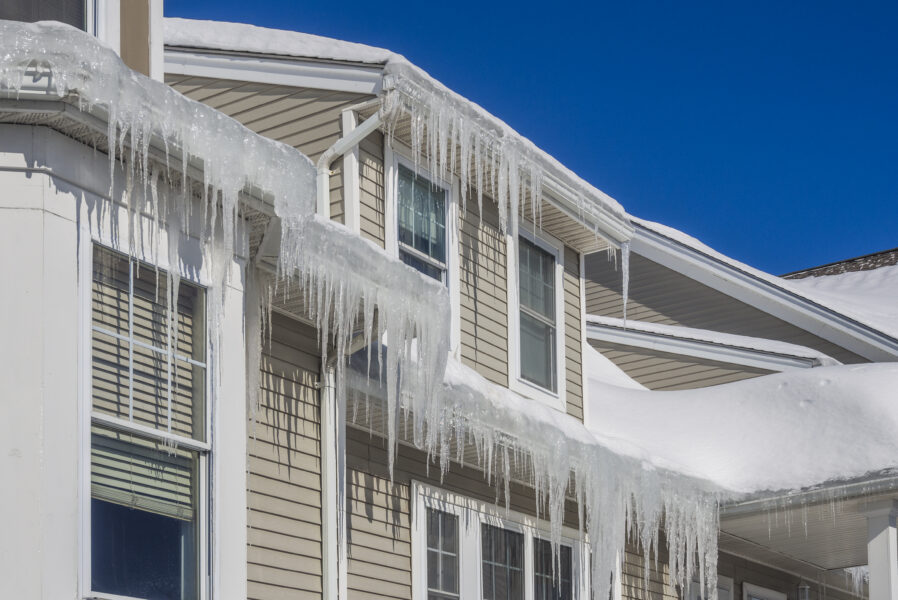

Ice dam removal tends to run about $1,200 per event on average, with costs climbing to over $4,000 for large dams on more complex roof designs. But beyond just the removal bill, backed-up water can soak through insulation, warp home framing, stain ceilings and walls and trigger rapid mold growth. With this potential for costly damage to your home, it’s important to implement preventive measures during the winter season.
What is an ice dam?
An ice dam is a ridge of ice that forms along the edge of a roof or in gutters, preventing melting snow from draining properly. As water backs up behind the ice, it can seep beneath the roof’s shingles and into the home, causing damage to the roof, insulation, ceilings and walls.
Ice dams usually form when heat escapes up from inside the home and causes snow to melt on the warmer sections of the roof. The water then refreezes at the colder roof edges near the gutters, creating a constant cycle of melting and freezing that allows ice dams to form and grow.
Ice dams can cause significant damage, particularly if trapped water seeps beneath roofing materials and enters the home. Moisture from trapped water can damage shingles, framing, insulation, ceilings, walls, paint and other interior finishes, and persistent moisture may also create conditions for mold and mildew growth. If ice dams form repeatedly over multiple winter seasons, the resulting water intrusion can contribute to gradual deterioration and costly repairs.
Preventing ice dams starts with addressing the conditions that allow them to form. While removing an existing ice dam may provide temporary relief, addressing the underlying causes offers more lasting protection.
Five Components of Ice Dam Prevention
No single fix can address every risk factor that contributes to ice dam formation, so an integrated approach is necessary. The five components below each target a different part of the root problem and work best when combined.
Attic Insulation and Ventilation
A well-insulated and ventilated attic is one of the most important ways to prevent ice dams. Insulation helps keep heat from escaping from your living space into the attic, while ventilation allows warm air in the attic to escape. Together, these measures help keep the roof at a more consistent temperature so snow is less likely to melt and refreeze at the edges.
For colder climates, most experts recommend attic insulation between R38 and R60, though local building codes may require different minimum values. Air sealing is just as important as insulation, since gaps around recessed lights, plumbing vents, chimneys, attic hatches and wiring can allow warm air to bypass insulation and enter the attic. A blower-door test or professional energy assessment can help identify hidden air leaks.
Attic vents also need to remain clear so that outside air can enter near the roof’s lower edge and warmer air can escape near the top. Make sure attic insulation or other materials are not blocking these vents. A roofing or insulation professional can help determine whether your attic has enough insulation and ventilation for your home and climate.
Gutter and Drainage Maintenance
Clean, properly functioning gutters give melting snow a place to drain instead of allowing water to collect and freeze along the roof’s edge. Before winter weather begins, remove leaves, twigs and other debris from your gutters and downspouts. Check them periodically throughout the winter season for ice or other blockages.
Water should flow freely through the gutters and downspouts, and drain away from your home. Sagging gutters, loose hardware and other damaged areas can create spots where water collects and freezes. Gutter guards may help reduce debris buildup, but they still need to be regularly inspected and maintained.
Checking your gutters at least once a year for cracks, rust, loose connections and drainage problems can help keep them working properly.
Heat Cable and De-icing Systems
Heat cables can help keep pathways open so that melting snow can drain from your roof, particularly in areas that regularly develop ice. They are typically installed along the roof’s edge and may also extend through gutters and downspouts.
However, heat cables are not a substitute for proper insulation and ventilation. If too much heat is escaping into your attic, the underlying conditions that cause ice dams will still be present. Heat cables are generally most useful as an additional preventive measure in areas where ice tends to build up.
Because these systems use electricity in wet, icy conditions, proper installation is vital. Homeowners should work with a qualified professional who can determine where heat cables are needed and install them with appropriate electrical protection.
Ice and Water Shield Installation
An ice and water shield is a self-adhering membrane installed underneath roof shingles to help prevent water from entering your home. If an ice dam causes water to back up beneath the shingles, this protective layer provides an additional barrier between the water and the roof structure. Because the shield is installed beneath the shingles, it is generally added when a roof is being repaired or replaced.
The 2024 International Residential Code requires an ice barrier along the eaves in areas with a history of ice dam formation. Specific requirements will vary by location, so homeowners should work with a qualified roofing contractor who is familiar with local codes.
Snow Removal and Management
Removing snow from the edge of your roof after heavy snowfall can help reduce the risk of ice dam formation. A roof rake can be used from the ground to carefully clear the first few feet of snow along the roof’s edge where ice dams are most likely to develop. Avoid climbing onto a snowy or icy roof; for steep, high or difficult-to-reach roofs, professional snow removal is the safest option.
Avoid using improper removal techniques, such as chopping or hammering, as this could damage shingles and may affect manufacturer warranties.
When possible, remove snow before temperatures begin cycling between daytime melting and overnight freezing since this can accelerate ice dam formation.
Common Ice Dam Prevention Mistakes
Several common mistakes can reduce the effectiveness of ice dam prevention efforts or create additional problems. Make sure to avoid:
- Using rock salt instead of calcium chloride. Rock salt can damage shingles, gutters and nearby vegetation. Calcium chloride is typically a safer option for melting ice. Some homeowners fill pantyhose with calcium chloride to create channels through an ice dam, but this should only be used as a temporary solution, not a long-term fix.
- Improper heat cable installation. Installing heat cables without GFCI protection, allowing cable runs to overlap or using the wrong type of cable can create electrical hazards or even cause new ice dams to form. When removal is necessary, professional steam removal is generally safer than chipping or hammering ice off the roof.
- Treating the symptoms instead of the cause. Heat cables and gutter heaters cannot compensate for poor attic insulation or air leaks. Without addressing underlying issues, the conditions that cause ice dams will persist.
- Overlooking attic ventilation. Blocked soffit vents, missing insulation baffles or an imbalance between intake and exhaust ventilation can trap heat beneath the roof deck and contribute to ice dam formation.
- Improper DIY installation. Incorrect installation of ice and water shield or ventilation components can leave gaps in protection if building code requirements for overlap, flashing or roof slope are not followed.
Protect Your Home from Winter Weather Damage
Ice dam prevention is an investment in the long-term protection of your home, and the strategies outlined here are most effective when implemented well before winter arrives.
In addition to preventive strategies, choosing the right home insurance policy and maintaining adequate coverage for winter weather risks are important parts of the equation. Higginbotham works with homeowners to evaluate their risks and identify coverage options that align with their needs, location and budget. To review your personal insurance options or discuss how home maintenance practices factor into your coverage, connect with a Higginbotham personal insurance specialist.