Trump Announces First Deal to Lower Costs of Prescription Drugs
On Sept. 30, 2025, President Donald Trump announced the first agreement with a major pharmaceutical company, Pfizer, to offer lower prices on its drugs to the Medicaid program and directly to consumers. According to the White House, the president aims to bring American drug prices in line with the lowest paid by other developed nations (or the most-favored-nation [MFN] price).
These negotiated drugs will be available on TrumpRx.gov, a federally operated website. The website is expected to launch sometime in 2026 and would point consumers to pharmaceutical companies’ direct-to-consumer websites to fill their orders. Such website deals would be available for patients who are not using their health insurance.
Pfizer also agreed to launch new medicines at prices “at parity” with those in other countries. Trump noted that if Pfizer continues to invest in manufacturing in the United States, the pharmaceutical company won’t be subject to tariffs on drugs imported into the country.
According to the announcement, more than 100 million patients are impacted by the diseases that Pfizer’s medicines treat. Medications impacted by the agreement with Pfizer include the following:
- Eucrisa, a topical ointment for atopic dermatitis, will be available at an 80% discount to patients purchasing directly.
- Xeljanz, an oral medication for rheumatoid arthritis, psoriatic arthritis and ulcerative colitis, will be available at a 40% discount.
- Zavzpret, a treatment for migraines, will be available at a 50% discount.
Employer Takeaway
According to the White House, this new agreement aims to ensure that “foreign nations can no longer use price controls to free ride on American innovation by guaranteeing MFN prices on all new innovative medicines Pfizer brings to market.” This is the first deal related to the MFN pricing, and the president said similar deals with other drugmakers are in the works. Employers should continue to monitor prescription drug changes, and Higginbotham and our team of pharmacy specialists will keep you updated with any notable developments.
How the Government Shutdown Could Impact Your Business
On Oct. 1, 2025, the U.S. federal government shut down after congressional leaders failed to reach an agreement on a short-term funding deal. During the shutdown, government agencies must cease all but their most critical functions, paving the way for hundreds of thousands of federal workers to be furloughed and shuttering various national programs and services.
Although the average government shutdown lasts less than a week, three of the past four shutdowns have surpassed this time frame, with the 2018-19 shutdown extending to a record-breaking 35 days. In any case, a shutdown can have far-reaching impacts for employers, potentially affecting various aspects of their operations. This article outlines federal agencies and groups impacted by the shutdown and how their limitations could affect employers across the country.
The DOL
The U.S. Department of Labor (DOL) establishes and enforces federal labor laws to protect employees’ rights, ensure safe working conditions, and maintain fair employment opportunities and benefits. This department will scale back enforcement efforts, regulatory actions, technical assistance and compliance audits amid the shutdown. The DOL also comprises multiple federal agencies that will be affected by the shutdown, including the Wage and Hour Division (WHD), the U.S. Bureau of Labor Statistics (BLS), and the Occupational Safety and Health Administration (OSHA).
The WHD is responsible for investigating and enforcing legislation related to minimum wage, overtime pay and child labor safeguards. During the shutdown, the agency will not open new wage and hour investigations and halt any compliance activities in progress. At this time, it’s unclear whether automatic extensions will apply to due dates for related filings, or if they do, how long the extensions will be. If the shutdown lasts several weeks, employers can also anticipate prolonged delays in ongoing litigation involving the WHD.
The BLS is the primary fact-finding agency for the federal government as it pertains to the topics of labor economics and statistics. Amid the shutdown, the BLS will suspend all operations, including its monthly reports on the state of the U.S. employment market. This means employers will have reduced visibility of new and emerging employment trends.
OSHA is responsible for creating and enforcing occupational safety and health requirements. While employers remain subject to applicable OSHA standards during the shutdown, the agency will suspend most of its workplace inspections, except for those involving occupational fatalities, catastrophes and high-risk or imminent danger situations. Based on past government shutdowns, this could reduce workplace inspections by as much as 85%. Although State OSHA Plans can continue to deliver essential functions throughout the shutdown, they are often primarily funded by the federal agency, making it challenging to stay operational.
The EEOC
The U.S. Equal Employment Opportunity Commission (EEOC), a federal agency responsible for preventing discrimination in the workplace, has the authority to receive, initiate and investigate charges of discrimination filed against employers. Amid the shutdown, individuals can continue to file discrimination charges against employers and request appeals for or reconsideration of open cases.
However, the EEOC will not be able to initiate new investigations, conduct hearings or mediations, host outreach programs or respond to questions or concerns regarding open cases. Furthermore, any employment-related litigation that directly involves the EEOC as a party will be suspended, unless the relevant court has not granted a requested continuance.
The NLRB
The National Labor Relations Board (NLRB), a federal agency responsible for enforcing labor laws related to union activities and collective bargaining, has the authority to investigate and prosecute unfair labor practices within the private sector and oversee elections that certify unions as representatives of employees. For most of 2025, the NLRB has operated without a three-member quorum, meaning it lacks the leadership personnel necessary to issue decisions and conduct official business. Even so, day-to-day case handling and union elections have largely pressed on as usual at the regional level.
Nevertheless, amid the shutdown, the NLRB will be unable to process new representation petitions and unfair labor practice charges against employers. It will also halt all administrative litigation and hearings. For pending matters, the agency is expected to adjust current due dates for filings by keeping cases in a state of temporary suspended animation, automatically granting an extension of time equal to the total length of the shutdown.
The DHS
The U.S. Department of Homeland Security safeguards the country against acts of terrorism and similar threats by managing border security, immigration requirements, customs laws and national cybersecurity measures. While the DHS typically remains open during government shutdowns, one of the federal agencies it comprises, namely the U.S. Citizenship and Immigration Services (USCIS), could be impacted due to its reliance on certain DOL operations and funding.
The USCIS facilitates a substantial portion of the nation’s immigration processes. Because this agency is fee-based, most of its services will remain intact. Yet, the USCIS cannot process or finalize several different types of immigration documents and foreign employment applications (e.g., I-129 H1-B caps, extensions and transfers) without the prior completion of specific labor certification applications and wage determinations by the DOL, which are currently suspended. Consequently, much of this paperwork will be left at a standstill until the shutdown is lifted, thus impacting employers with foreign workers and job applicants.
In addition, the federal E-Verify system may be temporarily unavailable during the shutdown, eliminating employers’ ability to confirm their new hires’ employment eligibility and proceed with cases already underway. Even so, employers are still required to comply with Form I-9 obligations. As was the case with previous shutdowns, the USCIS is expected to release updated guidance to help employers limit potential liabilities stemming from the E-Verify system being down.
Federal Contractors
While federal contractors aren’t considered government employees, most private companies that perform work for agencies affected by the shutdown will likely be forced to suspend their operations via stop-work orders. Additionally, while many federal employees will receive back pay for the duration of the shutdown, contractors paid based on their time worked will not receive any compensation.
Considering the government’s increased investment in contractor programs and project outsourcing over the past few years, a growing number of private companies now rely on the government for most of their business. Depending on the length of the shutdown, this could lead to more widespread consequences, operational disruptions and financial instability among contractors when compared to prior shutdowns.
Employer Takeaway
As the government shutdown continues, many employers across the country may start to feel its effects in more ways than one. Employers should stay informed about the latest developments regarding the shutdown and work with trusted legal counsel, employment specialists and insurance professionals to respond accordingly.
IRS Releases Health FSA and Transportation Benefit Limits for 2026
On Oct. 9, 2025, the IRS released Revenue Procedure 2025-32 (Rev. Proc. 25-32), which includes the 2026 inflation-adjusted limit on employee salary reduction contributions to health flexible spending accounts (FSAs) and qualified transportation fringe benefit plans.
Health FSA Salary Reductions
For plan years beginning in 2026, the adjusted dollar limit on employees’ pre-tax contributions to health FSAs increases to $3,400. This is a $100 increase from the 2025 health FSA limit of $3,300. The health FSA limit is applied on an employee-by-employee basis. Each employee may only elect up to $3,400 in salary reductions in 2026, regardless of whether they have family members who benefit from the funds in that FSA. However, each family member eligible to participate in their own health FSA has a separate limit. For example, a married couple who have their own health FSAs can both make salary reductions of up to $3,400 for 2026, subject to any lower employer limits.
Health FSA Carryovers
As an exception to the use-or-lose rule, employers with health FSAs may allow employees to carry over a certain amount of funds remaining at the end of a plan year to reimburse eligible expenses incurred in the following plan year. The maximum carryover amount is adjusted annually for inflation. For 2026, Rev. Proc. 25-32 increases the maximum carryover limit to $680 (from $660 for 2025 plan years). Employers that allow carryovers may impose their own limit that is lower than the maximum carryover limit.
Qualified Transportation Benefits
Code Section 132(f) allows employers to offer a qualified transportation benefit program to their employees on a tax-free basis. Under this type of benefit program, employees can choose to have money withheld from their taxable compensation to pay for certain work-related commuting expenses (transportation passes, vanpooling parking, etc.) on a pre-tax basis. Employers may also contribute to their employees’ qualifying commuting expenses by paying the expenses directly or through a bona fide reimbursement arrangement.
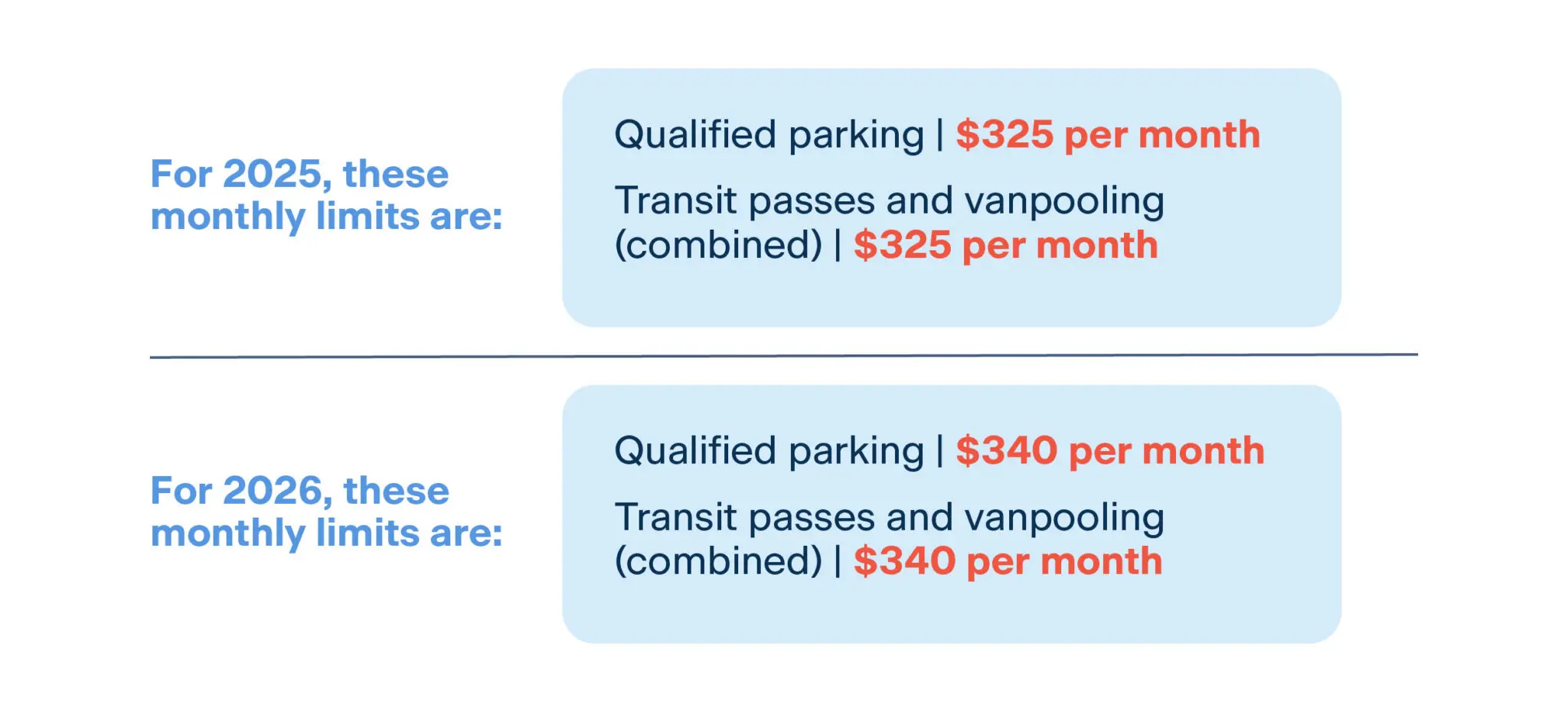
Code Section 132(f) establishes a maximum monthly amount of qualified transportation benefits that employees may exclude from their income. Both employee pre-tax salary deferrals and employer-paid benefits, if any, count toward the maximum amount.
Employer Takeaway
Employers should ensure their health FSAs do not allow employees to make pre-tax contributions over $3,400 for the 2026 plan year and transportation reimbursements do not exceed $340 per month. Employers can impose a lower limit on employees’ pre-tax contributions to a health FSA.
Employers should confirm that their health FSA contribution and transportation reimbursement limits are included in the plan’s documents and communicate it to employees at enrollment time.
Employee Leave Trends
In recent years, there have been significant changes in employee leave laws at the state level as states continue to pass and expand leave laws. As leave entitlements expand, numerous leave law trends have emerged.
States have implemented new paid sick leave (PSL) and paid family and medical leave (PFML) programs. Other states have updated their PSL and PFML laws to stay current with the provisions of the newer laws. Other significant trends include state PSL ballot measures, expanded reasons for leave, expanded definitions of “family member” and the redesigning of state PFML laws to work with the federal Family and Medical Leave Act (FMLA). Another interesting trend has been the emergence of voluntary paid family leave insurance programs.
At the federal level, employers should be aware that federal courts are increasingly ruling that the Uniformed Services Employment and Reemployment Rights Act (USERRA) requires employers to provide paid leave for military service if they compensate employees for comparable leaves.
Please see our white paper to educate your team on key leave law trends employers may continue to encounter in the future.