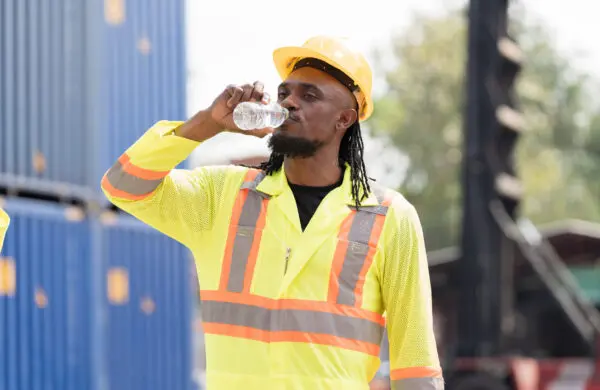

We all know how brutal the sun can be during the dog days of summer, and those working on construction sites and roadwork projects get direct exposure. This can leave them vulnerable to heat exhaustion or heat stroke, so it’s not surprising that the number of workers’ compensation claims often increases during the summer months. Fortunately, there are steps that can be taken to protect your employees from heat-related illness.
Know the Signs
Both supervisors and crew members working in the construction industry should be trained to identify the symptoms of heat-related illness and respond quickly to signs of heat exhaustion or heat stroke.
- Heat Exhaustion: Common symptoms include muscle cramps, heavy sweating, dizziness, nausea, fatigue, headache, clammy skin and a weak but rapid pulse.
- Heat Stroke: The more severe of the two, heat stroke symptoms may include confusion, slurred speech, rapid heartbeat, flushed or dry skin, nausea, vomiting, unconsciousness and a core body temperature of 104 degrees Fahrenheit or higher. Immediate medical attention is needed.
Heat Illness Prevention Strategies
Preventing heat-related illness on construction sites requires planning, training and a commitment to safety. Consider the following strategies to help protect your employees from the summer heat.
- Educate employees. Education is a key part of heat-related illness prevention. Regular safety briefings should cover topics like the importance of proper hydration, warning signs of heat-related illness and how to respond to symptoms. Training and education are vital to building a culture of safety for your company and job sites.
- Prioritize hydration. Proper hydration should be a non-negotiable on every job site. Employers should always supply water and electrolyte-replenishing drinks like Gatorade or Powerade. Remind employees to drink fluids regularly (ideally every 15 to 20 minutes during hot conditions), even if they don’t feel thirsty.
- Have routine breaks. Scheduled breaks in shaded or air-conditioned areas are also essential to allow workers to cool down and recover.
- Start work earlier. If possible, consider modifying work hours to avoid the hottest parts of the day. Starting shifts earlier in the morning or splitting up more strenuous tasks throughout the day can help reduce exposure to peak heat.
- Provide protective gear and shade. Heat-reflective clothing, hats with brims and access to air-conditioned or shaded rest areas can make a difference. For job sites without natural shade, portable canopies or tents can be used to give employees a break from the sun’s rays.
- Monitor weather forecasts and heat index levels. Supervisors should check daily weather reports to anticipate dangerous conditions. Adjust work schedules and break frequency based on projected temperatures and heat advisories.
- Establish emergency response procedures. Employers should have a clear heat illness plan in place to help ensure a quick response if a worker shows signs of heat exhaustion or heat stroke. Procedures should be reviewed as part of employee education, and all workers should know who to contact, where to go and what steps to take if a heat-related incident occurs.
- Acclimatize and re-acclimatize workers. Acclimatize workers on their first day working in the heat. Employers should gradually increase new employees’ exposure to hot conditions over a period of 7 to 14 days, paying special care to ensure that they have sufficient time to cool down and rehydrate between shifts.
Stay Proactive
Construction is already a high-risk industry, and the summer heat can increase those risks even further. That’s why it’s important for employers to take a proactive approach to heat-related illness prevention.
At Higginbotham, we help companies navigate commercial insurance coverages and claims through innovative solutions and risk management strategies. To learn more about how we can support your team in the summer months and beyond, talk to one of our insurance and risk management professionals today.